The programme
The programme, in five movements
Piazzolla wrote in suites — the Estaciones Porteñas is four linked movements, not four separate songs — and the Teatro Astor Piazzolla programme is built the same way: one continuous evening in five sections, read like a concert bill rather than a variety show.
- I.
The sextet takes the stage
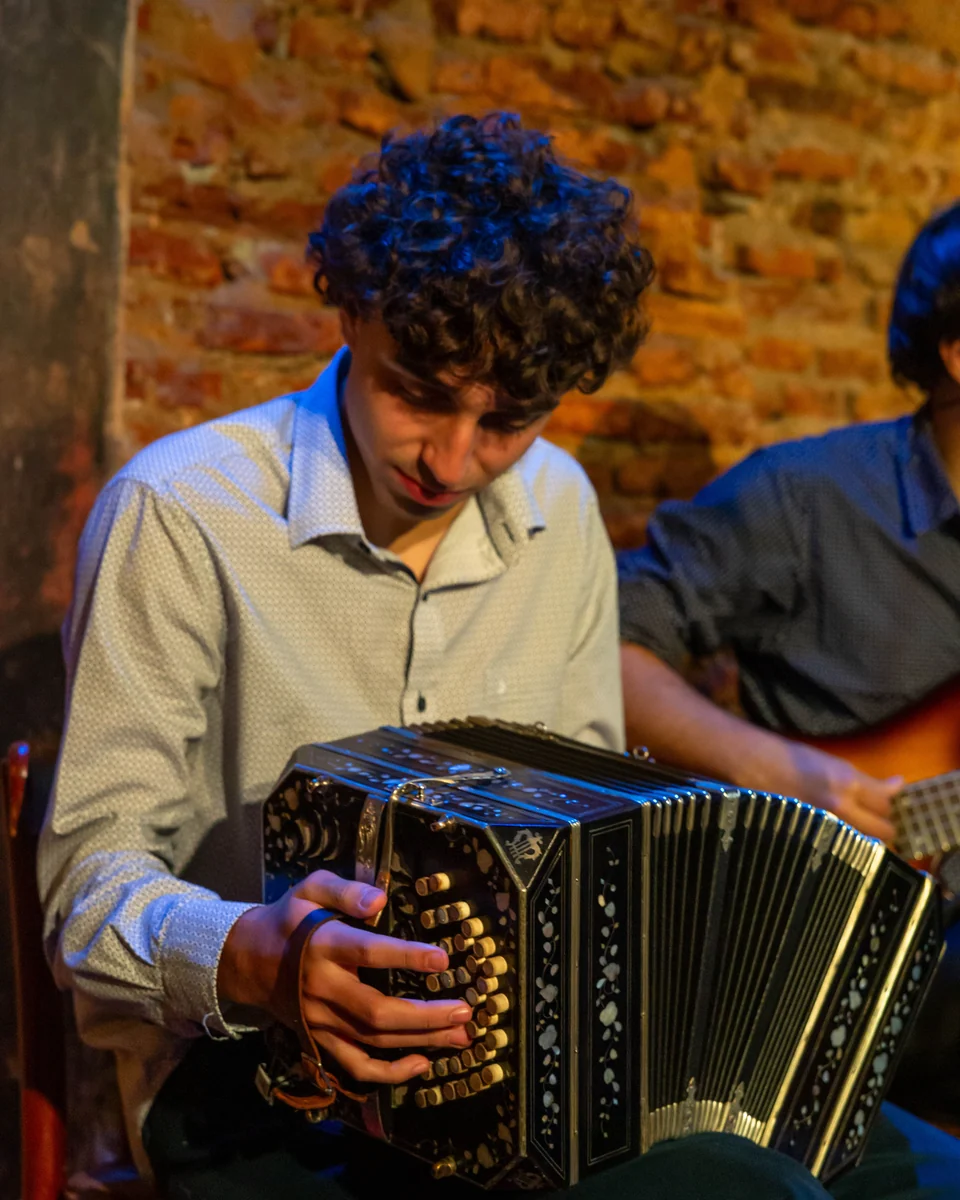
Piano, two violins, two bandoneons and a double bass set up in Teatro Astor Piazzolla before a single dancer appears — the instrumentation the whole evening runs on.
- II.
La milonga
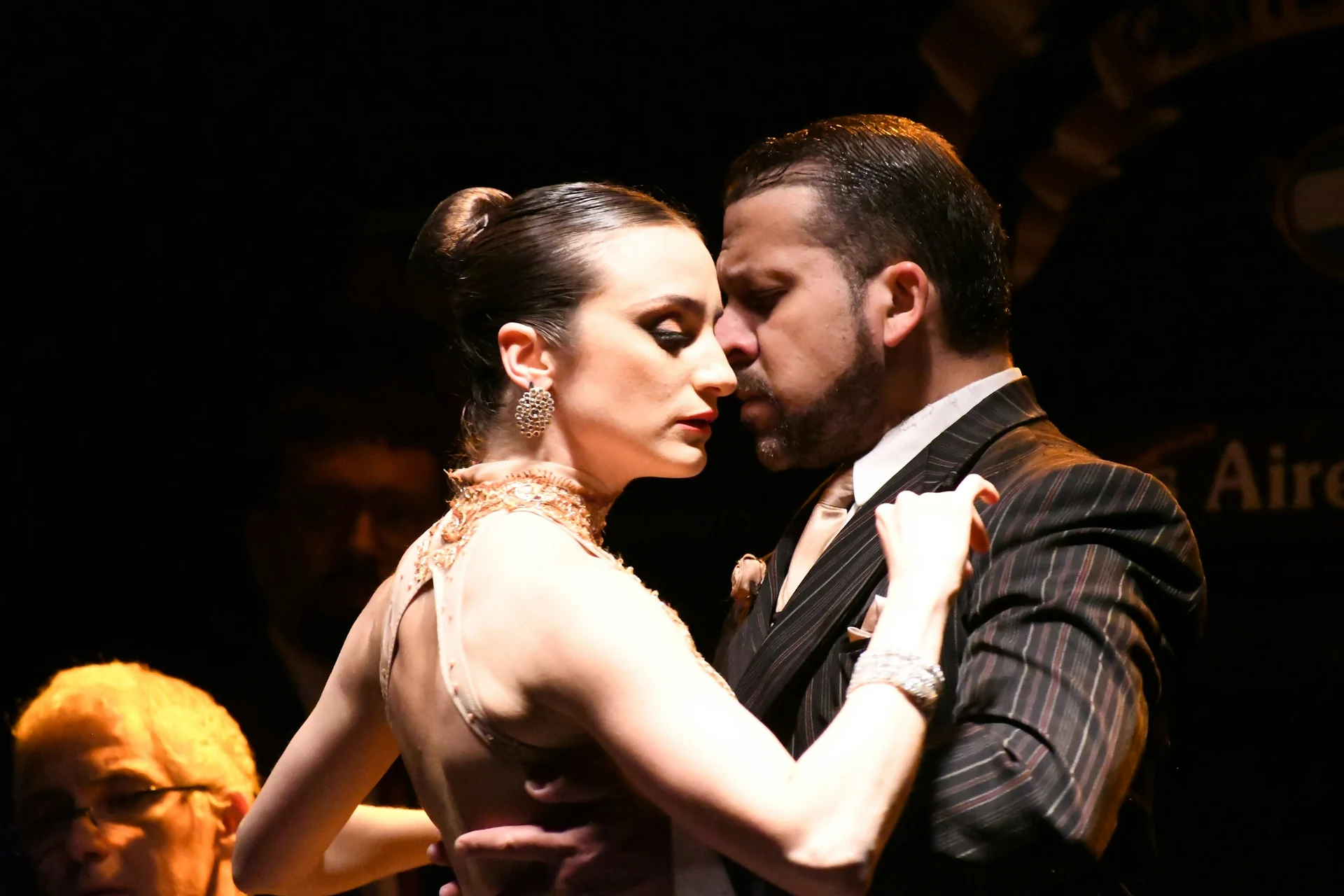
The faster, older relative of tango opens the dancing: quick footwork, a lighter mood, before the programme turns more serious.
- III.
El tango de salón
The five couples move into the close-embrace, traditional salon style that Piazzolla grew up dancing to on his father's records, before his own music pulls the show away from it.
- IV.
Las Cuatro Estaciones
Excerpts from Piazzolla's own Estaciones Porteñas — tango nuevo's harmonies against the bandoneon's older voice, and the point where the show is explicitly his rather than the genre's.
- V.
Pugliese
A closing set in the dramatic, stop-start ballroom style associated with Osvaldo Pugliese's orchestra — the evening's most physical dancing, saved for last.
Dinner service runs from around 8pm, ahead of the performance; show-only tickets are seated directly for the 10pm start.
Astor Piazzolla, briefly
Astor Piazzolla, briefly
A bandoneon from a New York pawn shop
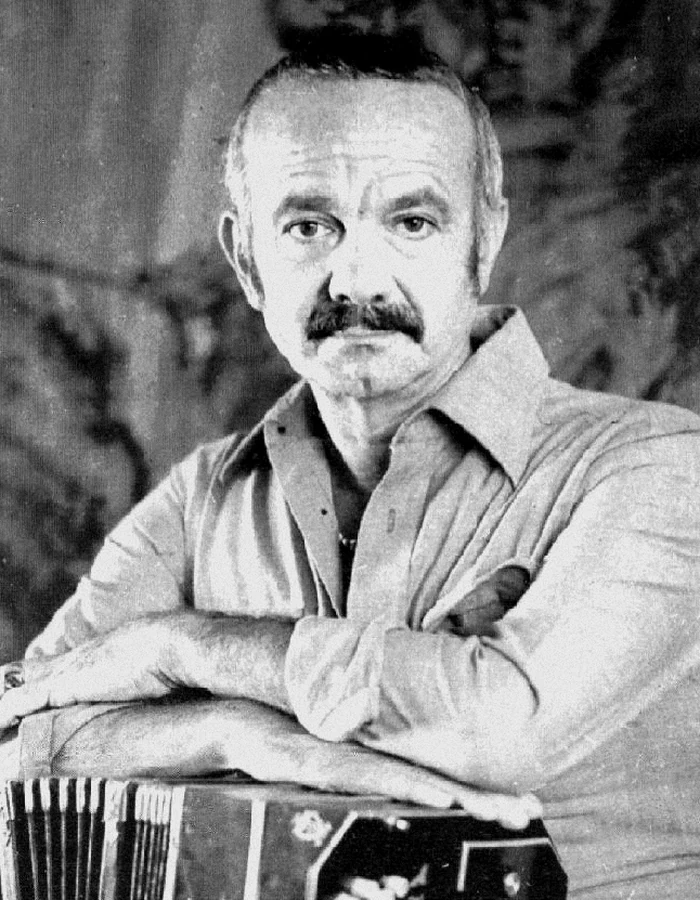
Piazzolla was born in Mar del Plata in 1921 and moved with his parents to Greenwich Village, New York, at the age of four. It was there, around 1929, that his father spotted a bandoneon in a pawn shop and bought it for him — the instrument Piazzolla would spend the next six decades rebuilding tango around.
The lesson in Paris
In 1954 Piazzolla went to Paris to study composition with Nadia Boulanger. He played her his classical pieces first and kept his tangos back, embarrassed by them; when she finally heard a few bars of one, she stopped him and told him that this, not the classical writing, was Piazzolla. He went home and rebuilt tango on his own terms.
Tango nuevo
What followed is usually called tango nuevo: tango scored with the harmonic language of jazz and classical composition, played by a small ensemble — piano, violin, bandoneon, guitar or double bass — rather than a full orchestra. It divided Buenos Aires for years before it became one of the city's defining exports.
Four seasons, one city
Between 1965 and 1970 Piazzolla wrote Cuatro Estaciones Porteñas, his own answer to Vivaldi — a set of four pieces for Buenos Aires' seasons rather than the countryside's. It's this set the Teatro Astor Piazzolla programme is built around.
The Galeria Guemes
Inside the Galeria Guemes
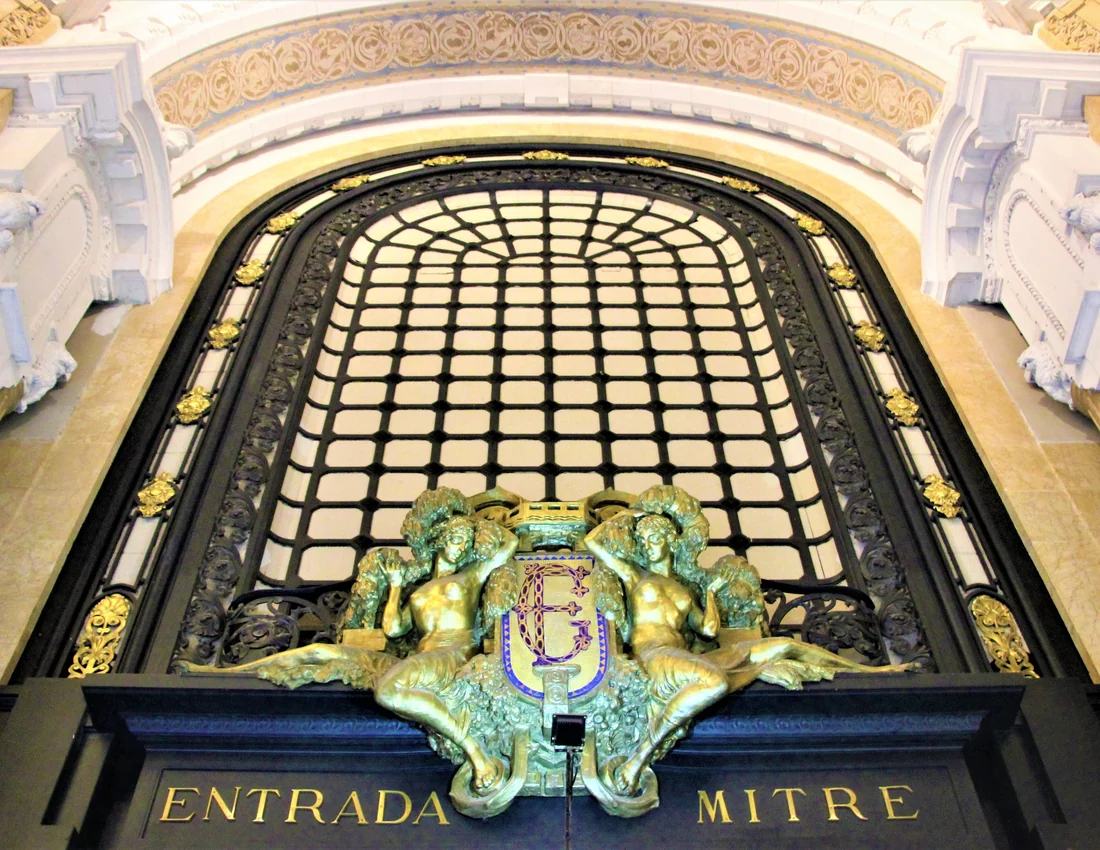
"Piazzolla Tango" is a show inside a specific, much older building — the arcade is worth a minute of attention on its own.
Buenos Aires' first concrete skyscraper
Italian architect Francesco Gianotti was commissioned in 1913 to design a tower and shopping arcade for the corner of Florida and Sarmiento; it opened in December 1915 as one of the first buildings in the city built entirely in reinforced concrete, and was counted among its tallest for years afterwards.
A gallery, then a theatre below it
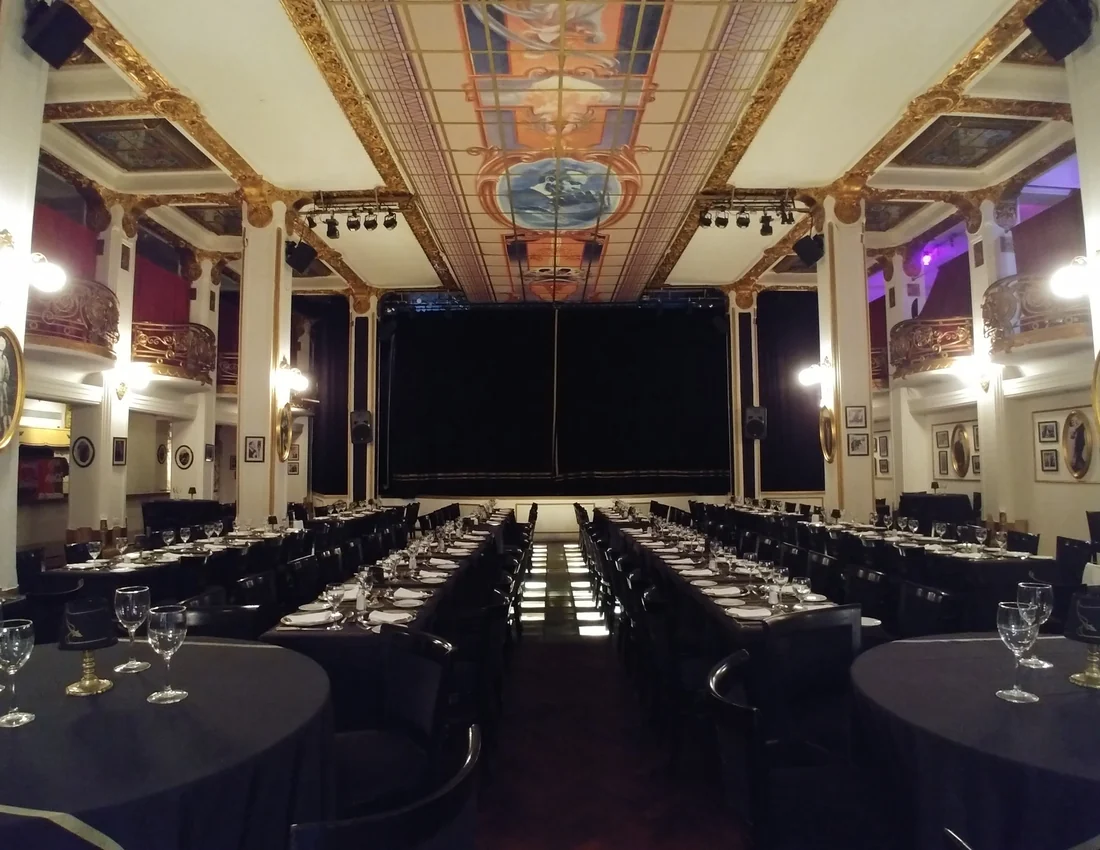
Above street level the Guemes still carries its original Art Nouveau ironwork, gilded relief and a long glass-roofed arcade; two theatres sit within the same building, including the room used for the Piazzolla programme, decorated with painted glass ceiling panels and tiered private boxes rather than built as a plain function room.
A building that has already been written about
The arcade has its own literary history — Antoine de Saint-Exupéry lived in an apartment here in 1931 while flying mail routes for Aeroposta Argentina, and Julio Cortázar later wrote it into his fiction alongside the arcades of Paris.
Stalls, dinner or VIP
Show only, stalls, dinner or the VIP gourmet menu
| Ticket type | What's included | Best for |
|---|---|---|
| Show only | A seat in Teatro Astor Piazzolla, two drinks and coffee or tea, and the full sextet-and-dance programme | Travellers who've eaten already and want the performance on its own |
| Stalls | The same show-only ticket, in the rows closest to the dance floor | A closer view of the footwork, without paying for dinner |
| Dinner (Platea) | The same show-only inclusions, with a three-course Argentine menu served at your table ahead of the sextet's opening set | Folding the meal and the performance into a single sitting |
| VIP gourmet dinner | An upgraded three-course menu with unlimited drinks through the night, from US$99pp | A closer table for a celebration or a special-occasion night |
How the night runs
How a Piazzolla Tango night runs
The shape of the evening is the same whichever ticket type you book — what changes is what happens before the sextet starts.
- Arrival
Into the arcade
You enter through the Galeria Guemes on Florida Street and head down to Teatro Astor Piazzolla, seated at tables facing the stage rather than in rows.
- If you've booked dinner
A three-course Argentine menu
Dinner service starts from around 8pm, ahead of the performance, with a three-course menu; show-only tickets are seated closer to the 10pm start with two drinks included instead.
- 10pm
The sextet opens
Piano, two violins, two bandoneons and double bass open the programme, and the five dance couples and two singers join it in stages through the five sections of the show.
- Close
Out onto Florida Street
The performance runs roughly an hour to an hour and a quarter; dinner tickets run the evening longer. Either way you're back out on Florida Street, not Puerto Madero or San Telmo — the microcentro, not the docks.
Book Piazzolla Tango
Check tonight's availability
Availability and the current from-price, live from GetYourGuide.
Florida Street, getting there
Florida Street and the microcentro at night
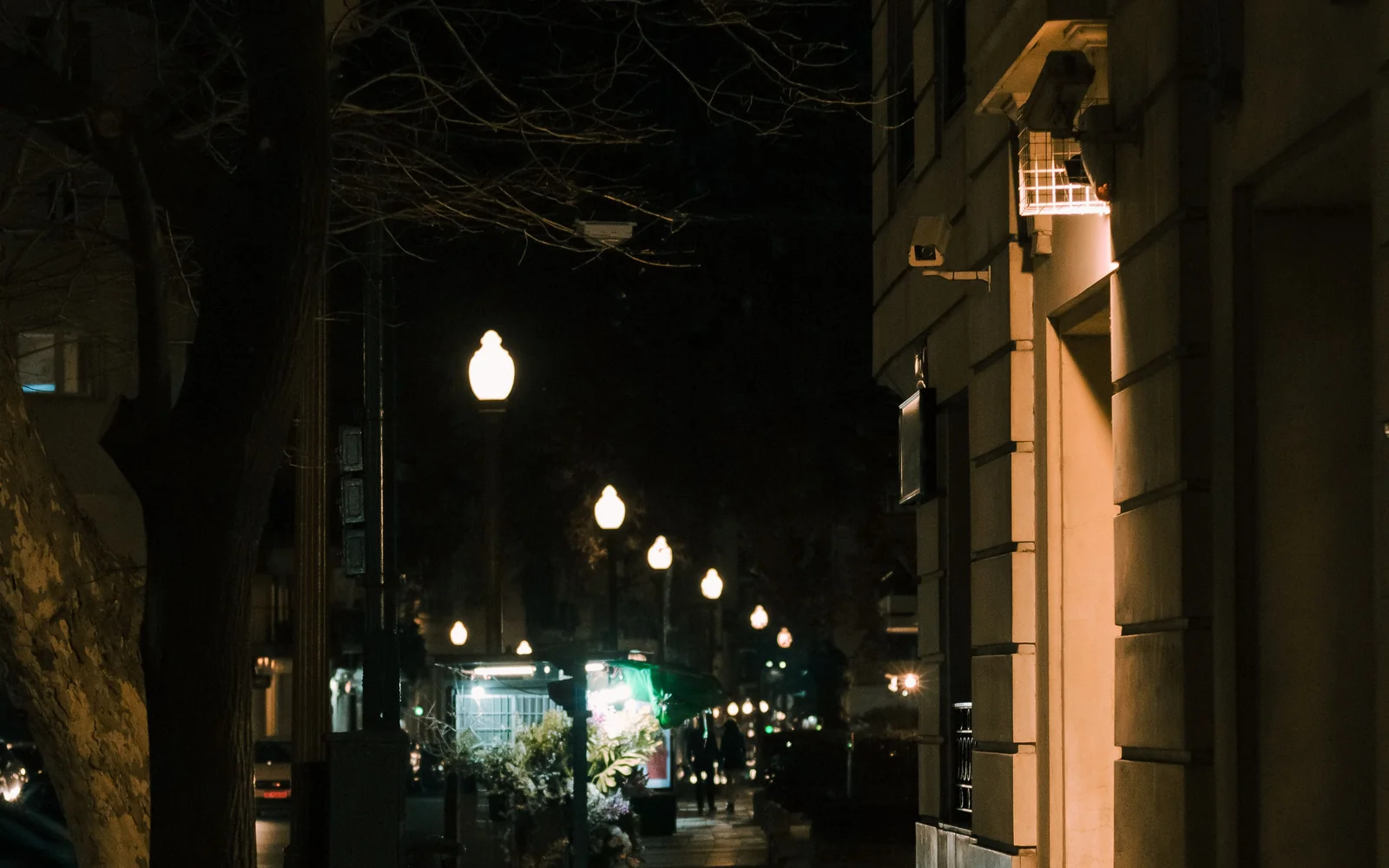
Finding the Guemes entrance
The arcade runs between Florida and San Martín streets, a block from Plaza San Martín and a short walk from Avenida Corrientes; the Florida 165 entrance is the one to look for, and it's pedestrian-only from mid-afternoon.
Getting to the microcentro after dark
The area empties of office traffic by early evening, so the walk in from a hotel in Recoleta or Retiro is quiet rather than crowded; a taxi or rideshare direct to the Florida entrance is the simpler option later at night.
Timing your arrival
Dinner service begins ahead of the 10pm show; if you've booked show-only, arriving 20–30 minutes early gives you time to find your table before the sextet starts.
FAQ
Before your night at the Galería
Where exactly is the Piazzolla Tango show?
Inside Teatro Astor Piazzolla, one of two theatres inside the Galeria Guemes arcade at Florida 165 in the Buenos Aires microcentro — not in Puerto Madero or San Telmo.
What's the difference between show-only and stalls?
Both include the same performance and two drinks; stalls seating is in the rows closest to the dance floor, for travellers who want a closer view without adding dinner.
Is dinner worth adding?
It depends what you want from the night — the dinner and VIP tickets add a three-course Argentine menu and turn the evening into a longer sit-down event, while show-only is built around the performance itself, seated later with two drinks instead.
How many dancers and musicians are on the programme?
Five dance couples, two singers and a sextet of piano, two violins, two bandoneons and double bass.
Is the show actually built around Piazzolla's music?
Yes — the programme is centred on his Cuatro Estaciones Porteñas (Four Seasons of Buenos Aires) alongside salon tango, milonga and Pugliese-style ballroom sections.
What should I wear?
Smart casual is standard for the room; there's no strict dress code, but it's a seated dinner-theatre rather than a bar, so beachwear or gym kit will stand out.
Can I get there on foot from Recoleta or Retiro?
Yes, it's a walkable 15–25 minutes from either, along well-lit streets in the early evening; later at night a taxi or rideshare direct to the Florida 165 entrance is the simpler choice.
Is the show suitable for children?
There's no stated age restriction on the listing, but it's a late-evening seated performance with a formal Buenos Aires dinner-theatre atmosphere, better suited to older children than toddlers.
Guides to the evening
Guides to the evening
A Piazzolla Tango evening, step by step
From walking into the Galeria Guemes to the last bandoneon chord — what actually happens, in order.
Read the guide →The composerAstor Piazzolla and tango nuevo, briefly
Who he was, what tango nuevo actually changed, and why a whole theatre in Buenos Aires is now built around his music.
Read the guide →The buildingThe Galeria Guemes: the building and its stories
A 1915 concrete skyscraper with a tango theatre in it, and the writers who lived and worked inside it before the show ever existed.
Read the guide →Before you goA listening guide: Piazzolla works to know before the show
Four well-documented Piazzolla pieces worth hearing beforehand — we're not claiming this exact set list is played on any given night.
Read the guide →Choosing a ticketStalls, dinner or VIP: choosing your option
What each Piazzolla Tango ticket type actually adds, and who each one genuinely suits.
Read the guide →Getting thereFlorida Street and the microcentro at night
Where the Galeria Guemes actually sits, and how to get to and from it after dark without overthinking it.
Read the guide →More Buenos Aires evenings